Have Scopes Will Travel

The HAA Traveling Road Show made two stops this past weekend and entertained would be amateur astronomers from Hamilton at the Parks Canada Discovery Centre (PCDC), and from Brantford at the Brantford Tourism Centre (BTC).
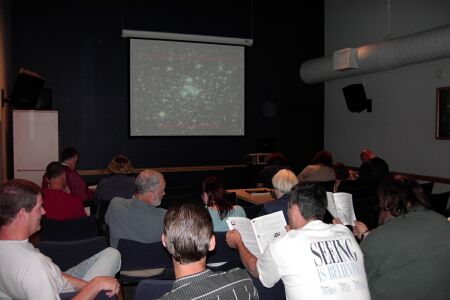
Friday night at the PCDC saw a crowd of about two dozen guests enjoy presentations on observing by Tim Philp, Glenn Muller, and Mike Spicer. Gusting winds outside made observing difficult, but not impossible, and Glenn, Mike, Steve G, and Kerry LH provided views of the Moon, Jupiter, M13 and Albireo.
The highlight of the evening was the bright overhead pass of the ISS and Space Shuttle combination.
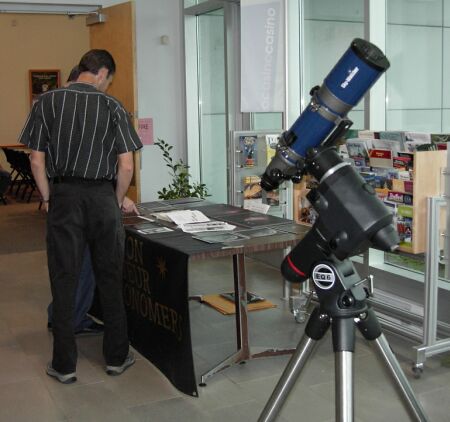
On Saturday, a crowd of about thirty guests who had read Tim Philp’s astro-column in the Brantford Expositor joined HAA members at the BTC to find out more about astronomy and the HAA. On the display table were information booklets and examples of Tim Harpur’s beautiful astrophotography.

Tim P gave an informative presentation and Glenn spoke on the benefits of joining a club.

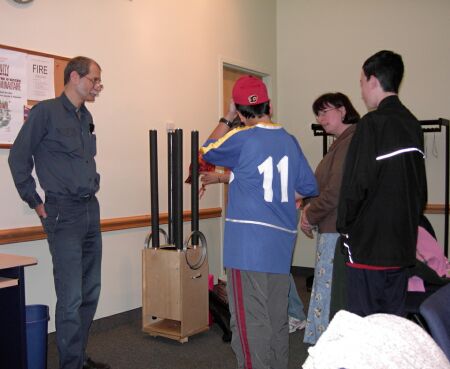
The weather was even less cooperative than Friday night but the Tekatch’s, Don Pullen, and Glenn set up their scopes anyway for a Q&A session.

Thanks to all those members (mentioned or not) who showed up with their knowledge and equipment. Your efforts were appreciated by all who came out 🙂

Satellite Watching

Help me identify this object! I got home last night in time to go out and watch the International Space Station and the shuttle go past, and stayed outside afterwards with my binoculars for some observing. The ISS/shuttle configuration was dazzlingly bright at about mag.-4 and right on time (of course!) passing nearly overhead at 9:57pm, but then 6 minutes later another satellite of about magnitude -2 (best guess) went by, following a nearly identical inclination. It started in the NE and traveled up towards the summer triangle but passed just NE of Deneb, when it faded as it passed into the Earth’s shadow. So what was it? I don’t know. Although there are lots of things flying around up there, I cant figure out what else could have appeared so bright. It was not in the same orbit as the ISS (during the 6 minutes since the station passed, the Earth turned to the east so any object following in the same orbit should appear west of preceeding object, right?). Suggestions are more than welcome. And yes, the rest of the night was lovely, with many object appearing beautifully in my binos and even Jupiter’s moons showing very nicely. There are more opportunities for you to see the ISS and shuttle tonight and a lovely overhead pass tomorrow night. Check heavens-above.com for times and maps.

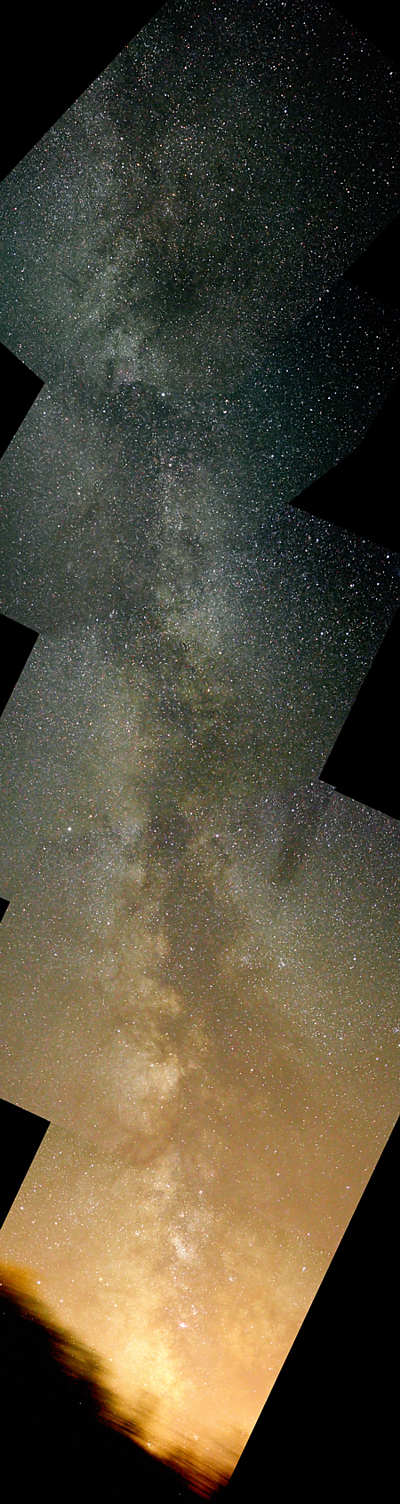
Milkyway Collage

So I spent 4 late hours imaging the Milkyway using an 18mm-125mm zoom set to 30mm f/4 – 6 frames – each frame is a set of 3 x 10 minutes at ISO 400 stacked. Then spent 2 days rotating, stitching, blending, colour balancing…. to get the following image (reduced to less than 2% original size):

Personally, unless printing large scale, I prefer the single frame 10 minute exposure using my 10mm-20mm ultra-wide zoom set to 10mm f/4 (image posted a few days ago) – it looks as good on small scale, no blend lines, and saves quite a bit of time.

A week of Astronomy

Images taken over the past week…. By KerryLH

***Starfest (Friday August 10th)***
Getting set up for a night of observing, astrophotography and meteor scatter

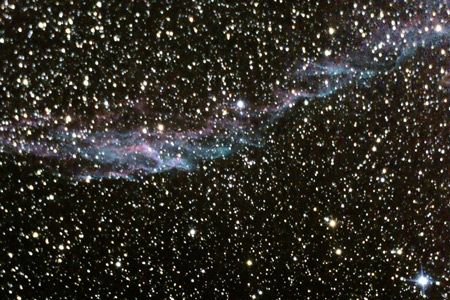
NGC 6992 – Network Nebula ‘part of the Veil’
Canon 300D, C6-SCT, f6.3 focal reducer
9×3-5min + darks
Autoguided with Meade DSI on the Sky-Watcher 80mm Equinox

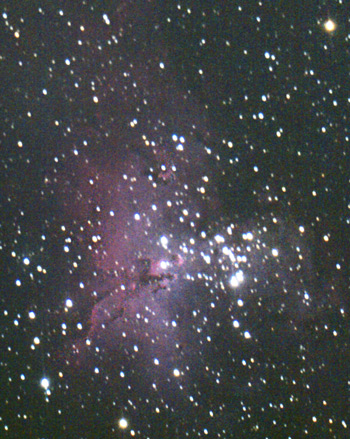
M16 – Eagle Nebula
Canon 300D, C6-SCT, f6.3 focal reducer
9×3-5min + darks
Autoguided with Meade DSI on the Sky-Watcher 80mm Equinox

***Persied meteor shower night (Sunday August 12th)***
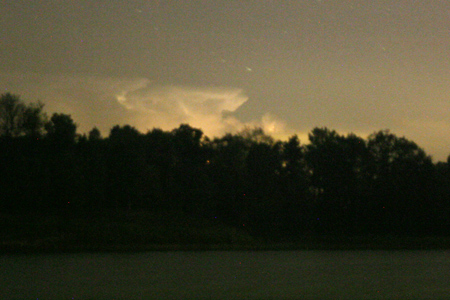
Distant Thunderstorm

***Home in Grimsby (Monday August 13th – last night)***
M31 – Andromeda Galaxy
Canon 300D, Skywatcher 80mm Equinox
15x3min + 4 darks
Autoguided with Meade DSI on the c6-SCT

Images and Thoughts from Starfest, by Bob Christmas

During this year’s (2007’s) Starfest, we were very fortunate to have gotten clear skies for two nights, and part of a third night, during our stay at The River Place.

The only rain was a few minutes of sprinkles Thursday morning.

IMHO, I’m not a huge fan of tenting, but the spectacular clear skies on the Wednesday and Friday nights, and excellent cameraderie amongst fellow astronomers and fellow club members, not to mention a gazillion Perseid meteors, including a few bright bolides, made the camping part of it well worth it.

Here are more images from Starfest that I took from two of the clear nights. I will post larger versions of these and other images soon:

The Lagoon Nebula (M8) in Sagittarius, from the Wednesday night (August 8, 2007):

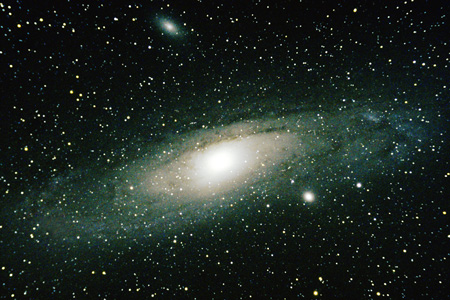
The Andromeda Galaxy (M31), as well as its two dwarf-elliptical companions M110 (above) and M32 (below), from the Friday night (August 10, 2007):

When it was all over, on Sunday Morning, it was time to pack it in. Some of us, including a fellow HAA colleague whose tent here says it all, had our work cut out for us, taking everything down and packing it away.

But we all managed to get packed before an approaching cold front from the west brought in rain Sunday afternoon (…what timing!).

Ad Astra!

Bob C.

Images from Starfest

Starfest gave a number of clear skies – no rain (at least it hadn’t hit yet when I packed up and left at 8:00am Sunday morning). A number of us spent Friday night imaging into the wee hours – and then casual observing on Saturday night – walking around and checking out the other equipment – it was quite a pleasure looking through a 25″ telescope! A few very brilliant meteors were spotted – one that lasted about 3 seconds as it flashed and pieces broke off was a treat.

I’m up in Tobermory for a little more observing – tonight’s forcast for the meteor shower is very promising here.

Tim’s Images from Starfest:

Part of the Milkyway

Veil Nebula (or at least the west part – NGC6960)

M31 (Andromeda), M32, and M110

Report from HAA Group at Starfest

CLEAR SKIES (and so far NO rain)

Greetings from HAA’s Active (pre-registered) members at Starfest: Today’s beautiful skies will be followed by a grand night of observing (we hope – see the attached CSC). We’ve had one great night already – Wednesday was phenomenal with Kerry and Bob getting some nice images, Glenn and Gail getting the last object needed to complete their Messier list (M74), and Steve Germann discovering faint galaxies like NGC 404.
The most moisture we’ve had was the heavy dew on Wednesday night but we know how to cope and didn’t have to pack it in until 2:30am.
According to Alex Tekatch, Starfest is the most wonderful time of the year.
That’s all for now – stay tuned – your fellow observing members: Alex, Tim H., Ann, Bill, Anthony, Steve, Kerry, Glenn, Gail, Bob, Mike J., Cindy, Stewart, Jackie, Jim, Doug B., Doug W., Marg & Bruce.

PS, did we mention there is no sign of rain…

M16 By KerryLH from Wednesday night @ Starfest

The GWS with fancy new shroud (made by Ann) and improvised counterweight system

Update By Kerry
Currently we are expecting good sky conditions through the weekend!!!!!

Update by Bob Christmas
I arrived at Starfest on Wednesday afternoon (August 8, 2007), about 2-ish. I had my digital imaging setup ready to go at dusk that night, and, here’s one of my results from Wednesday night (2007/08/08). This is the Trifid Nebula (M20), as well as open cluster M21 above it. — Photo by Bob Christmas

Grimsby Observing: Friday and Saturday Night

*FRIDAY NIGHT*

What a fantastic 2 nights for observing and astrophotography. After the cold front went through Friday evening the skies became crystal clear. I wasn’t able to join the gang in Binbrook so I had to do my observing from the driveway. Since Glenn and Gail live a very short distance away, they opted to keep me company rather than make the long trek out to Binbrook. While my telescope, camera and computer were doing all the work of imaging, I was enjoying the views of many deep sky objects through their 6in dob, and both my 15×70 and their 10×50 binoculars.

Viewed objects: (list provided by Glenn)
-31 Cygni – small blue and gold double stars
-NGC 6940 – open cluster in Cygnus
-M27 – Dumbbell Nebula
-M71 – open cluster in Sagitta
-NGC 6934 – small globular in Delphinus
-NGC 7789 – the Magnificent Cluster – open cluster in Cassiopeia
-M13 & M92 – glob’s in Hercules
-NGC 6210 – planetary in Hercules
-Albireo – blue and gold double stars
-NGC 6543 – “Cat’s Eye” planetary in Draco
-tons of satellites

*SATURDAY NIGHT*

Another great night. I’m surprised that I’m not burned out yet. Anyway while hubby was doing some radio dxing I decided to set up again on the driveway. Another beautiful night!!!! I had problems with my images from Friday night so I decided to try my targets again. M51 and M71. In between exposures I was viewing many targets in my 15×70 Celestron Skymasters.

Viewed Objects in 15x70s:
-m27 dumbell nebula
-m71 glob cluster, in hazy air I was barely able to see this in the my 6in
-m81/82 a very nice pair to look at in binoculars
-m31 Andromeda Galaxy still pretty low in the sky
-m51 surprised I could see this
-m101 – again another surprise to find in binoculars
-various clusters and nebulas above Sagittarius
-various open clusters and doubles in Cygnus, Casseopia, and Lyra

Both nights I was able to make out mag 6 with averted vision at zenith.

M51 By KerryLH
13×3-5min exposures @ iso 800
Canon 300D, 6in SCT on the CG5-GT
autoguided with DSI and PHD Guiding
diffraction spike – copper wire

Friday with the GWS and everything

By 8:30 the last stragglers were still packing up to leave the park.

I selected a location on the hill with a clear view to the south and west, and a good view to the east, and started unpacking. Having a proper wrench, i was able this time to deploy the equatorial platform. Lots of new gadgets to unpack and set up.

The GWS now has a shroud, expertly assembled by Ann. It’s so fine.

The scope was almost perfectly aligned from last time, and took only a minor touch
on the knobs. I aligned it with the shroud on, no problem. The fully assembled scope on the platform is tall enough to require a 3 step ladder for the zenith. There’s 3 little rubber feet under the base of the Lightbridge 16, and they sit on flat parts of the platform without extra work. I did not try the second axis this time. I might have to add another small pad under the base for it.

We had some new members observing, and they brought a fine refractor on a goto mount.
Even a few non-members brought their scopes and set up.

The equatorial platform is great. It makes finding objects so much easier, and they
just sit there. Since it’s for 43 degrees and the latitude of Binbrook is
43.1 degrees, i just basically leveled it on its 4 feet and pointed the finder at Polaris, and it was ready to go. With a little help from my friends, i had the scope up on the platform and ticking away.

I took the time to assemble and adjust the camera holder. My pocket camera
has auto-focus, and getting it to stop trying was not easy.
I snapped this photo of Jupiter and its moons… (upload will have to wait till i resize the photo)

A tour of the skies with the GWS was in order. I found the following: Jupiter, M57, M13, Mizar and Alcor.

Then on to fainter things…
M31, M92, M27, M70, M29, M54.

I tried the ring nebula with a 5mm lens and a Barlow, making it fill over half
the field of view in the eyepiece.
Th platform kept me on target, as i tried to focus it.

At that magnification, there was blurring of the stars to small blobs, and i think it’s because the focal length is short (and the eyepiece has to be very fancy to cope). I will continue to search for eyepieces up to the task. There was no problem with brightness though. The ring was plain as day even at 731 times magnification.

I tried a camera holder Mike lent me, but it causes the scope to tip forward,
even with the clutch tightened down. I finally need a counterweight.
Jackie sold me her 3 inch scope an diagonal to use as a finder-scope.
Attaching the rings is my next project.
I noticed there’s a place on it to put a smaller finder-scope.

The GWS is so big… 🙂

After about an hour, i noticed that objects were drifting out of the field of view. Strange, the platform had been working so well…
It had reached the end of its travel. 2 good things… it did not dump the scope,
and it took a few seconds to reset by simply grabbing the base of the scope,
lifting slightly and repositioning the platform at the other end of its travel
for another run.

The moon was big and red on the horizon. Smoke from Montana fires is adding to the redness. I pointed the scope at it. In spite of there being another scope, and my car,
in the light path, i still got the moon. It was bright enough once it cleared the car, to project an image onto a sheet of paper the size of a dinner plate. Bye bye night vision.

I bought a new stool to use, but spent very little time sitting.

I am now able to navigate the star charts much quicker, and brought in the dumbell nebula for the final item before packing up.

The dumbell nebula. My red dot is right on, and with a low power eyepiece i found it in seconds. I am so happy with my ability to find things in the sky.
The best part was that although everyone’s scope had dewed up, the shroud on the GWS
kept it nice and dry to the end.

So i am happy, anyway.

Tuesday night report: Smokey Observing

Although the sky condition Tuesday night was not top notch, we still managed to get a decent amount of observing in. Not only were there the odd patches of high cloud… but much overlooked was a very thin layer of smoke aloft (from the Montana forest fires) which I noticed on the satellite imagery during the day, but was hoping it would not make it out this far. As mentioned in Steve’s post I forgot my camera adapter so astrophotography was going to be out of the question. I ended up setting up my 80mm and 6in anyway but didn’t really make much use of them compared to normal nights. Instead I spent some time testing out my new binoculars and checking out the views from Steve’s 16in. I did make a few comparison views of m27 and m71 in my 6in and his 16in. Obviously it was not a contest 🙂 With the 16in, M71, a faint globular cluster, was easily seen with direct vision in Steve’s scope… and in my 6in, well lets just say it was barely detectable with averted vision. M27 was nice in both scopes. I’m sure in a darker sky with better conditions Steve’s scope will perform even more spectacularly on those Messiers. Mike challenged me to find a faint band of stars that go through m27 in my 6in but I couldn’t see anything until I took my cheap 1.25 diagonal off. It was a nice challenge… that also led me to realize how important a good quality diagonal is. Now turning my attention to the binoculars… They were a pair of Celestron 15×70 Sky Masters. I recently got them for my birthday and they are a replacement to my cheap and now broken 16x50s that I had since I was 11 years old. Anyway Jupiter and its moons were nice a sharp. The Milky Way was spectacular… I have to say this is where binoculars are a real treat to use. The tripod that Steve set up for me made viewing a little easier since they are a bit on the heavy side for the arms. With a little help from Mike I found a few Messiers including m27… which looked really nice, bright and condensed. It is pretty rewarding finding and seeing deep sky objects with out the use of a telescope.

Anyway that’s it for now, I thought this was only going to be quick report.

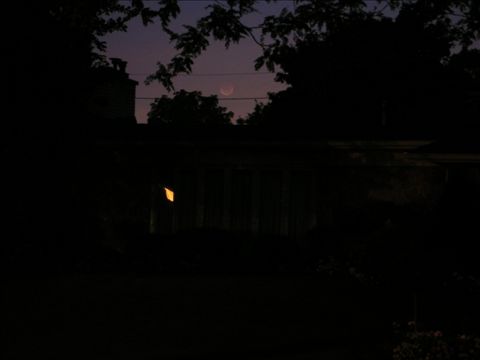
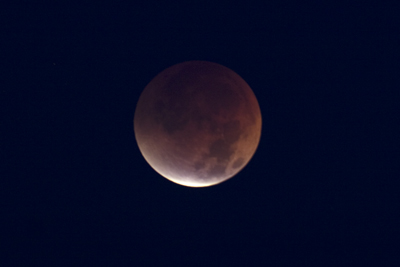
BTW Keep your eyes on the moon tonight!! If it is clear in the east when it rises, you will notice that it will appear really red and will stay orange for quite some time. This is from all the forest fire smoke that is still high up in the atmosphere. The smoke should clear out in time for tomorrow nights observing which Mike just posted about.

KerryLH