I headed for Silent Lake Provinvcial Park (SLPP) as soon as my dinner banquet was over, and arrived at about 11:20 pm on Friday night; I was greeted by a wondrously dark clear sky.
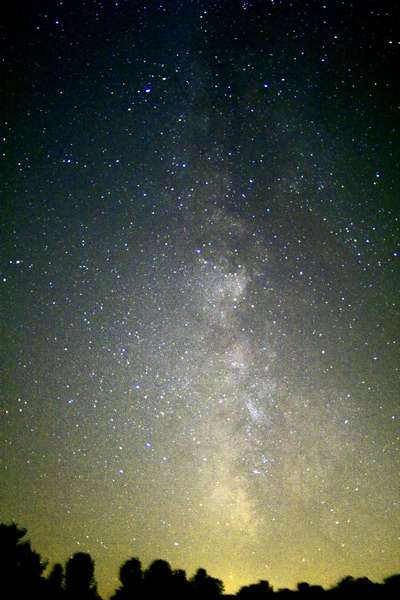
The SQM reported 21.6 which is about as dark as i have ever seen it.
Since nobody else was in the parking lot, i debated setting up the Great White Scope (GWS) or going in search of the others. (They had said you cannot see the sky from the campsites, so i wondered if they even knew it was clear). The other motivation was getting my tent out of the car so i could reach the scope.
After fishing up a map from the front gate, i found my site. The roads are very bumpy and it’s a good idea to go nice and slow when there’s a GWS in the car.
Everyone had already gone to sleep, since, as i found out later, it had rained earlier in the evening.
I guess it’s a good thing i did not immediately set up the scope, because there was a patch
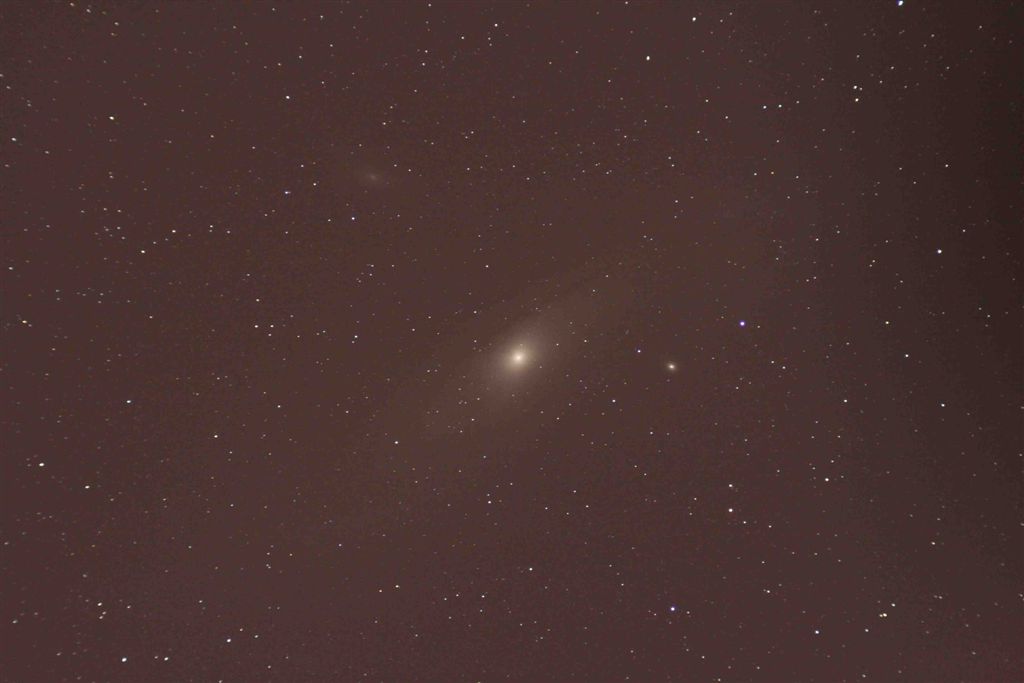
of rain at midnight for about 15 minutes, timed to coincide with me setting up my tent. The rain relented and the skies cleared again. I settled for some binocular observing from the campsite through my small bit of sky, till about 3 am. Unfortunately, the zenith is not a good binocular target without a binocular box, and it was a bit of a physical strain. I did eventually reel in M31 and some other bits near it.
Saturday was a busy day, including a canoe trip on the lake, piloted by Don. On our return from the canoing, i was able to pass the oars to Margaret and Bruce, who went on a dragon-boat practice to the end of the lake and back in something like 1/3 of the time Don and I had spent. (But we did both ends of the lake, so i don’t feel quite so out-classed.) Some pretty fine food followed, with Sausage on a bun with Glenn and Gail, and a yummy salad made by Margaret.
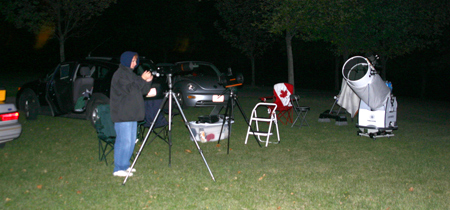
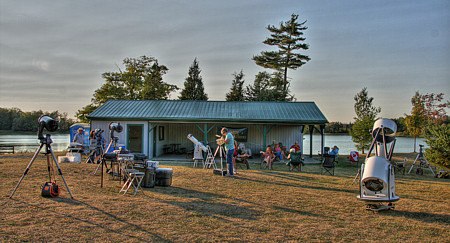
The evening observing session got underway at about 7:30 pm, with Don and i leading the charge back to the day-use parking. Apart from a quick visit by the ranger, and a swimmer, we had the whole area to ourselves.
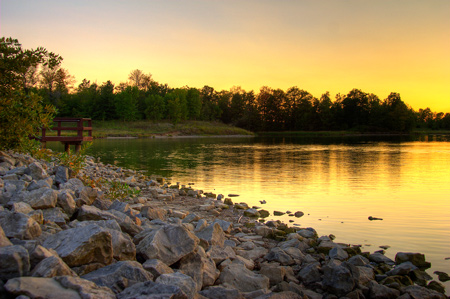
We decided to set up down by the beach, which provided an excellent view to the southeast along the lake. Unfortunately some trees near the beach blocked access to M45 for a time.
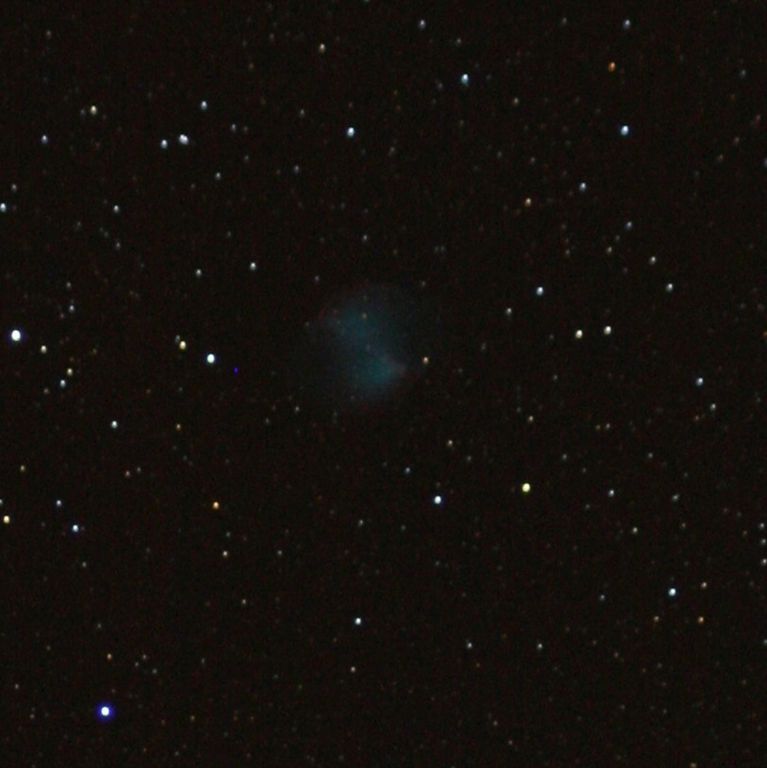
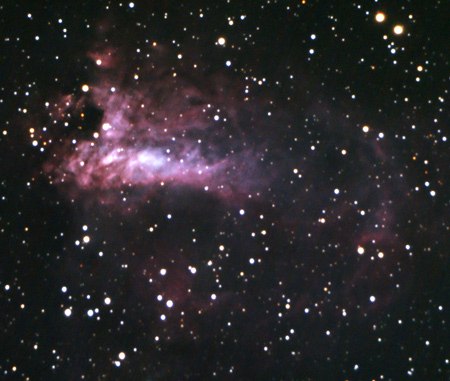
I entertained a parade of observers with the GWS on deep sky objects, including Neptune, Uranus, and the Helix Nebula. The evening was punctuated by shooting stars.
I continued my quest for sequential messier marathon objects (SMMO’s), getting M33. The trees were not placed well and i did not get any more that evening. But that’s a good reason to explore the rest of the sky in the meantime.
At about 3 am clouds rolled in from the east and blocked most of the sky, providing an invitation to pack up and sleep. The hooting of owls along the lake was impressive.
I almost suspected it was a prankster, since instead of hooting, they called, “Hoot Hoot Hoot Hoot, Hoot-Hoot, Hoot-Hoooooooot” with the last hoot trailing off and lowering in pitch. I could hear them being answered from far away. Also the timing that i heard was not necessarily what the owls were hearing, because one was much closer to me than the other 2.
Also loons were calling on the lake. I heard all the variations of loon calls. Again, with the night air, they seemed to be very loud and carried a long way. It’s about 6 km from one end of the lake to the other.
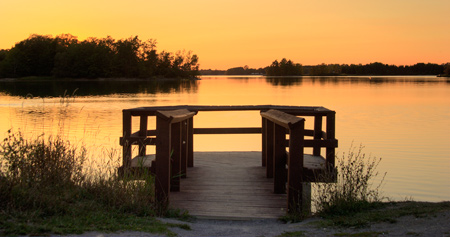
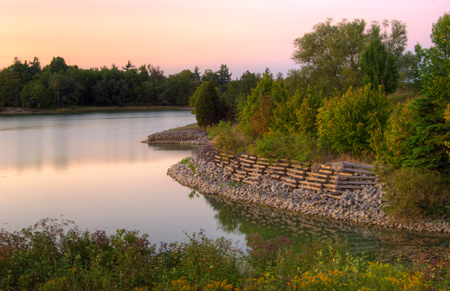
On Sunday, i set up for a hike around the lake, but discretion was the better part of valour when i realized that my knees might not take it and I would be miles from home when it happened. The trail is rather rugged in spots. I elected to return after a time spent at the first scenic lookout, and have a swim at the beach, and an afternoon nap.
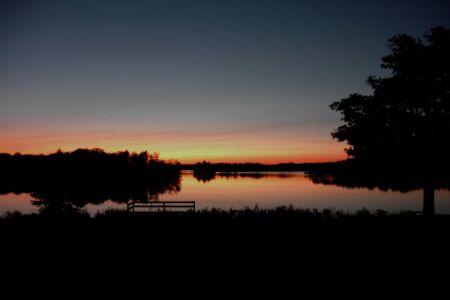
Since everyone took off by 2pm, I had the parking lot to myself in the evening. It was so dark and quiet. The SQM again read 21.6. I bid goodbye to 3 vehicles of picnickers with canoes and a snarling puppy, and a lone swimmer. We talked a while about astronomy and her experiences with family members who awaken early to see things like lunar eclipses.
While I waited for Polaris, I set up the Nextstar on a tripod and poked around the sky with it. Then I tried putting the XTi on it and picking up an image of Jupiter. Alas, i did not have good focus, and the image was pretty small, but at least the Nextstar is compatible with the XTi in terms of focal distance.
I tried some longer exposures, of terrestrial stuff. Eventually I started using the timer
on the camera so that pressing the button would not set the mount shaking.
I finally got a sighting on Polaris at about 8:00. Apart from one car that swung through the parking lot about 15 minutes later, i was alone for the rest of the evening. The passing trucks, about 1 every 10 minutes, on Hwy 28 about 2 km away were the only noise on an otherwise silent and almost windless night.
The Kendrick DG-3 was up and running, and i put on the fan on the primary, since i did not want dew to be the end of things this time. The DG-3 uses up a 9V battery in about 5 hours, depending on the weather, i guess.. It cycles to maintain the secondary just a bit above the air temperature.
My next SMMO, M34 was easy to find. After that it would be a few hours before M35 came up,
so i spent the time honing my skills with memory of the constellations, reviewing the other objects i have seen before. I found the Helix nebula from memory, after recognizing Aquarius in the sky.
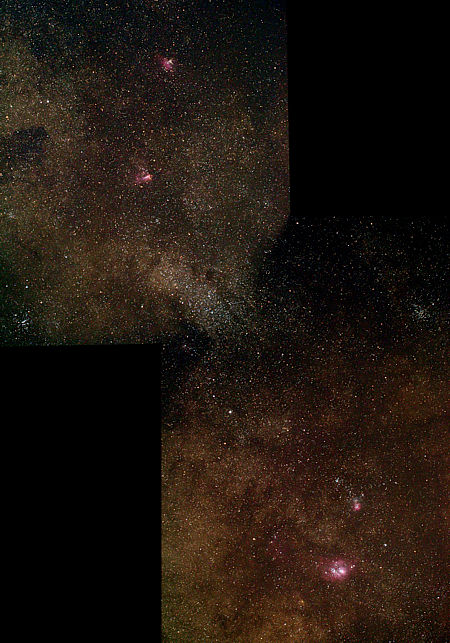
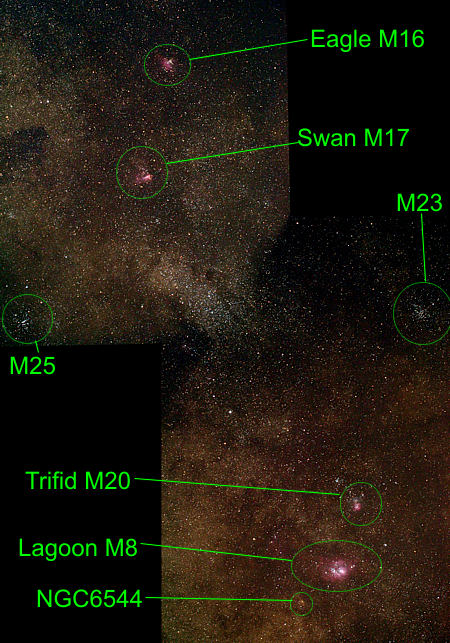
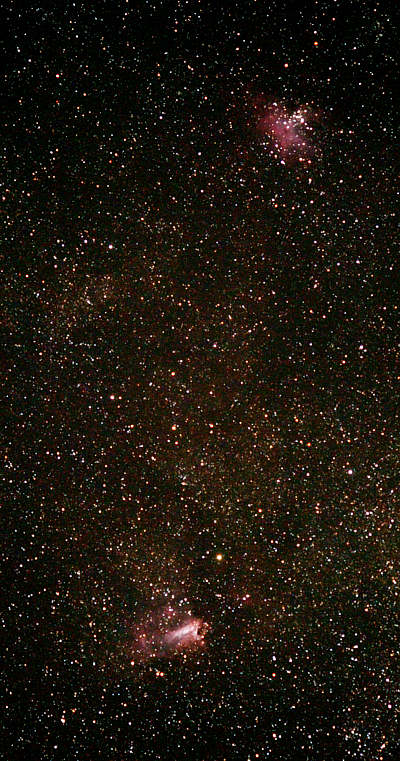
I can now fish up many Messier objects from memory, and the dark skies rewarded the effort with clear detailed views: M51, M100, M81, M82. The eagle nebula, and the wild duck cluster were still up, so i found them and studied them for a while, but Saggitarius was partly obscured by trees and setting fast.
I then turned my attention to NGC objects, using those near my intended M35 part of the sky as a selection criteria. I think i will craft some hand-drawn finder charts to highlight the way i find them since i normally have to use visible stars with my red dot finder, to get close. Star hopping with the Nextstar is very difficult because there are so many more stars than in the Atlas.
Mars and Aldebaran also came up. Mars was a small red disk, but when studied, it was like it was on fire, changing shape almost constantly. I guess the seeing was not so great for objects in that direction, low on the horizon. I had no planets near the zenith to compare with.
Looking at M45 i saw lots of tiny stars with the GWS which are invisible in smaller scopes. Also some differently coloured visual doubles in the center of M45.
M35 eventually came up and rewarded me for waiting for it. It has a lot of small diamond-like stars. I was able to find M1 again. (It took a very long time the first time i looked for it, at Starfest), M36, M37 and M38 were easy to find, and M39, near the zenith, called for some acrobatics.
By then M40 was low on the northern horizon, and some clouds had rolled in from the north.
I spent maybe 20 more minutes looking at the rest of the sky, and watching for meteors, and saw about 12 of them in the evening, but none so brilliant as the ones at Starfest.
M31 was big and bright. I could definitely see detail and nebulosity extending far from the core in both directions. I decided to pack up and had partially disassembled the scope when the clouds parted showing m40, but m41 was going to be hours away and the clouds were definitely moving in.
I was packed up and back at camp by 4 am, considering sleep or packing up to go home. Sleep won, and it was just as well, since packing up the tent in the dark makes it hard to sweep off the sand on it. Awake at 11, and on my way at 12:26 pm, Monday, i was home by 3:35, including time to stop for gas, a Plaque about a ‘Dynamite Explosion’ and some reasonably heavy traffic for a while in Toronto.
It’s a fair drive to SLPP but if you know the way the roads are good and the skies are dark. Next time i will bring a better stool so the zenith will be easier to see, and hopefully my camera will be in operation so that swathes of dark sky can be captured. Also, i think i will stay one or 2 extra nights, assuming there’s no events pressing in on my time from each side like this time.
Special thanks to those who shared their meals with me. All were so yummy. It’s a wonder i can keep my figure.