Lunar Eclipse coming Monday Night

Don’t forget…

It’s the first time we have had a Lunar Eclipse on the Winter Solstice
since the invention of the telescope.

It’s very late Monday night, (Tuesday Morning) and you can see it from anywhere.

Connect the dots

Canis Major won’t be in the early evening sky for a month or two,
but here’s a chance to brush up on connecting the dots.

I am including 2 renderings of Canis Major here…
Pick one and see if you can do better than a 5 stick figure in my star atlas.

Steve

Canis Major to Magnitude 6.0, designed for printing, then drawing the lines to make it look like something.

This one has a few less stars. I still see a poodle when i look at it.Best to right click, save the image, then print it.

Scope Clinic

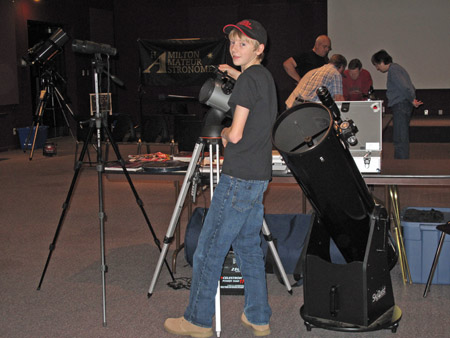
Kevin sets up to help at the Scope Clinic

Last night’s Scope Clinic was very well attended by club members eager to answer questions and offer recommendations to the public and other members about selecting astronomical equipment.

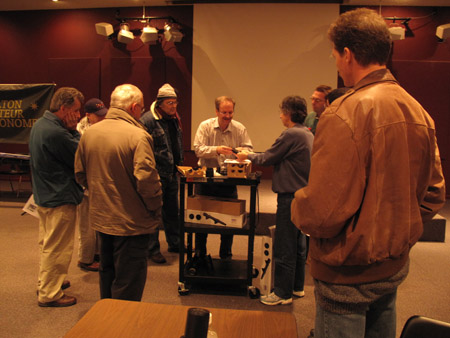
Steve Germann demonstrated telescope anatomy by assembling a Galileoscope in front of a crowd of interested spectators. The assembled telescope was tested and everyone had a chance to look through it before it was raffled off.

Steve assembles a Galileoscope before an enthralled crowd.

Due to the club’s efforts, I’m sure Santa will be delivering fewer “trash” scopes this Christmas!

LOFAR II is Back Up and Running

This is from Mike Jefferson:

LOFAR II is up and running – taking solar data and transmitting to Stanford again after a 2-month hiatus for overhaul. It has a new data-slave running on Wndows XP. It logged and transmitted 3.5 hr.s of data on November 19 and should have 24 hr.s of accumulation for November 20. My thanks to Chris Kubiak for all of the programming and configuring he did for this project!

-Mike J.

Two Prominent Astronomers

Two of the most prominent astronomers of the 20th century passed away this week.

Alan Sandage was a cosmologist and assistant to Edwin Hubble. Hubble (after whom the Hubble Space Telescope is named) discoved that the universe is expanding. Sandage, an American, worked under him as a grad student and carried on his work after Hubble’s death in 1953. He went on to provide what was at the time the best, and oldest, estimates of the age of the universe. He also studied star and galaxy formation, discovered jets in M82 and created the first 3 dimensional model of the structure of the nearby galaxies.

And just yesterday Brian Marsden passed away. Marsden, originally from England but residing in the United States, ran the Minor Planet Center at Harvard for many years. An expert on asteroids and comets, his was the final word regarding the discovery of new solar system bodies. He also was director of the Central Bureau for Astronomical Telegrams for 30 years, where all initial reports of new astronomical discoveries were sent. First word of a new supernova, or comet often came from Marsden.

Learning about what’s out there is often enhanced by learning about how thngs are discovered and the stories of thier discoverers. Now would be a great time to read up on the work that these two great astonomers did.

Supernova!

There’s a supernova recently discovered, and brightening.

It’s near UGC 5189A and it’s better than 12th magnitude.

Here’s a link to the page detailing other recent supernovae,

http://www.rochesterastronomy.com/supernova.html

and here’s a photo of it
The supernova is pretty bright considering the galaxy it's near.

Resources from November 12 Sky This Month

This is the best place to put some of the links and information i mentioned.

First of all, the name of the mystery comet…

C/2010 V1 (Ikeya-Murakami)

and some photos of it, courtesy of Paul Mortfield.

http://www.backyardastronomer.com/comets/2010V1_20101109-1a.jpg

http://www.backyardastronomer.com/comets/2010V1_20101109–FSQ_3a.jpg

and the link to Cartes Du Ciel

http://www.simtel.net/product.download.mirrors.php?id=59452

which will help you download a zip, which when unzipped, contains an exe which installs it all.

And finally, a series of star maps for Auriga.

This is for connect-the-dots. Kudos to anyone with a creative line drawing that uses most of the stars. You don’t have to make a shepherd, but if you draw something else, let us know why the drawing is as it is (your legend to go with the constellation)

From your browser, right-click on an image and choose ‘save picture as’. You should then be able to print it just by double-clicking it and selecting the print toolbar button in your preview program.
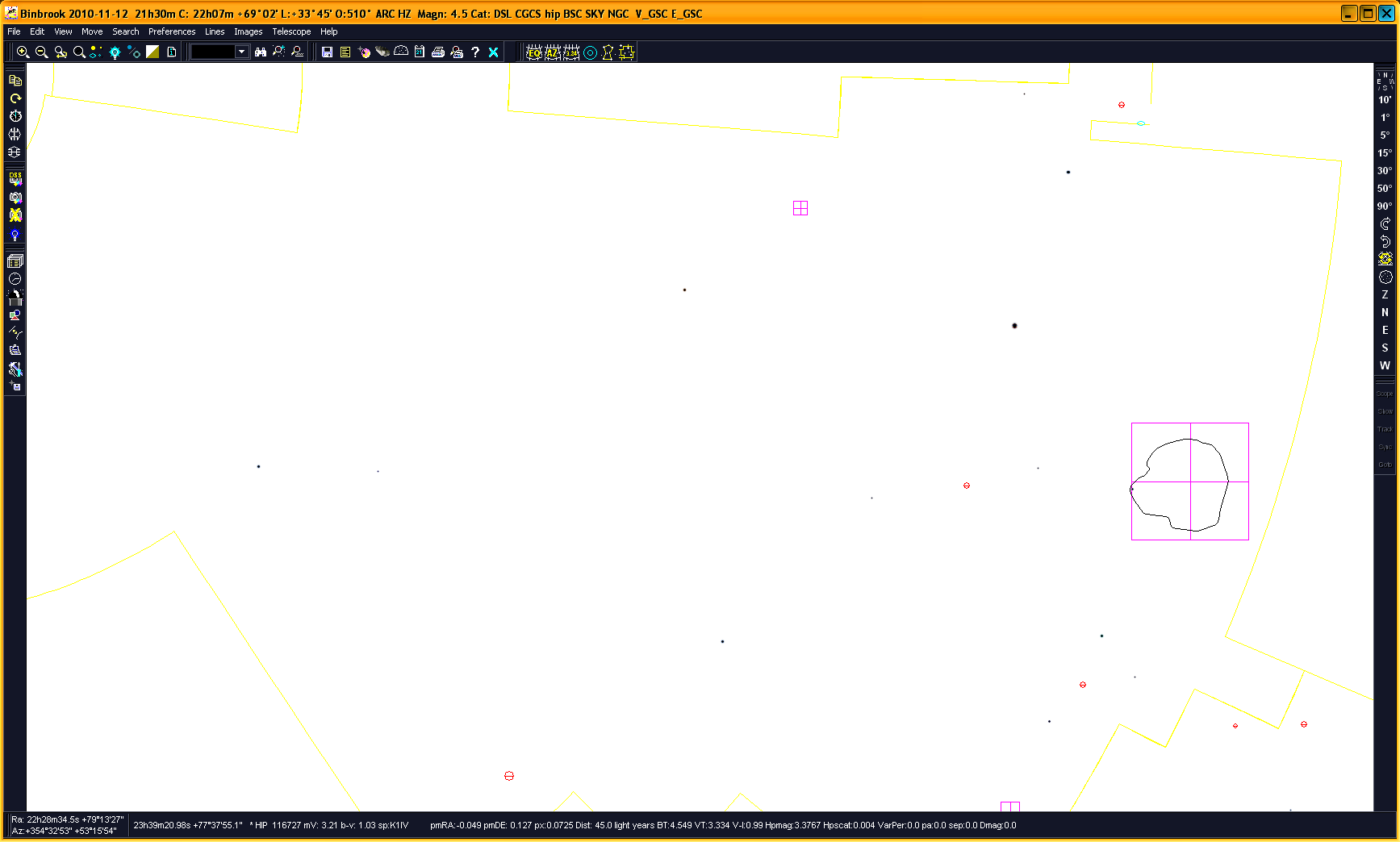
A star chart png file.

A star chart just showing stars in Auriga brighter than Magnitude 4.5
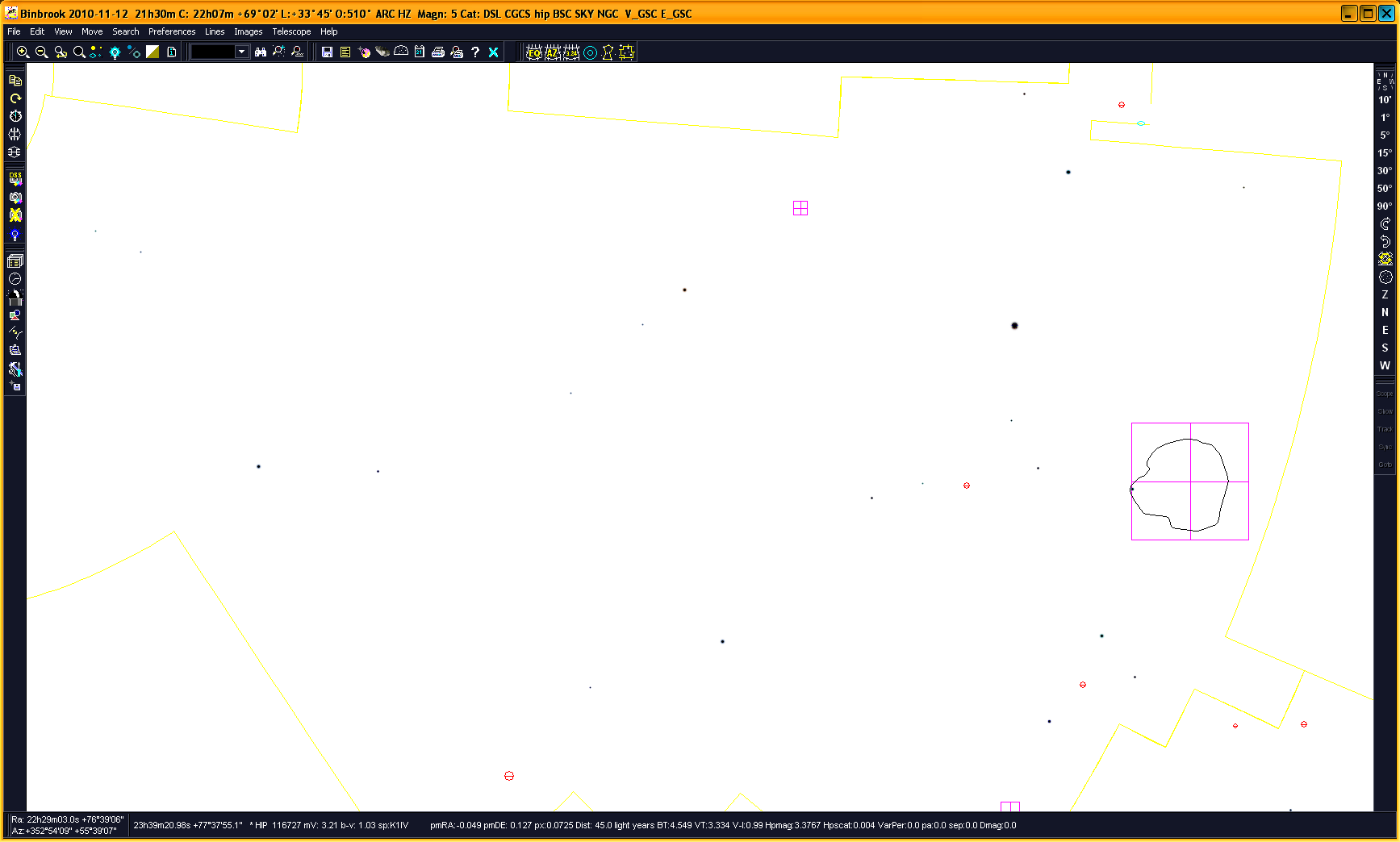
A chart shoing the stars of Auriga brighter than magnitude 5.0
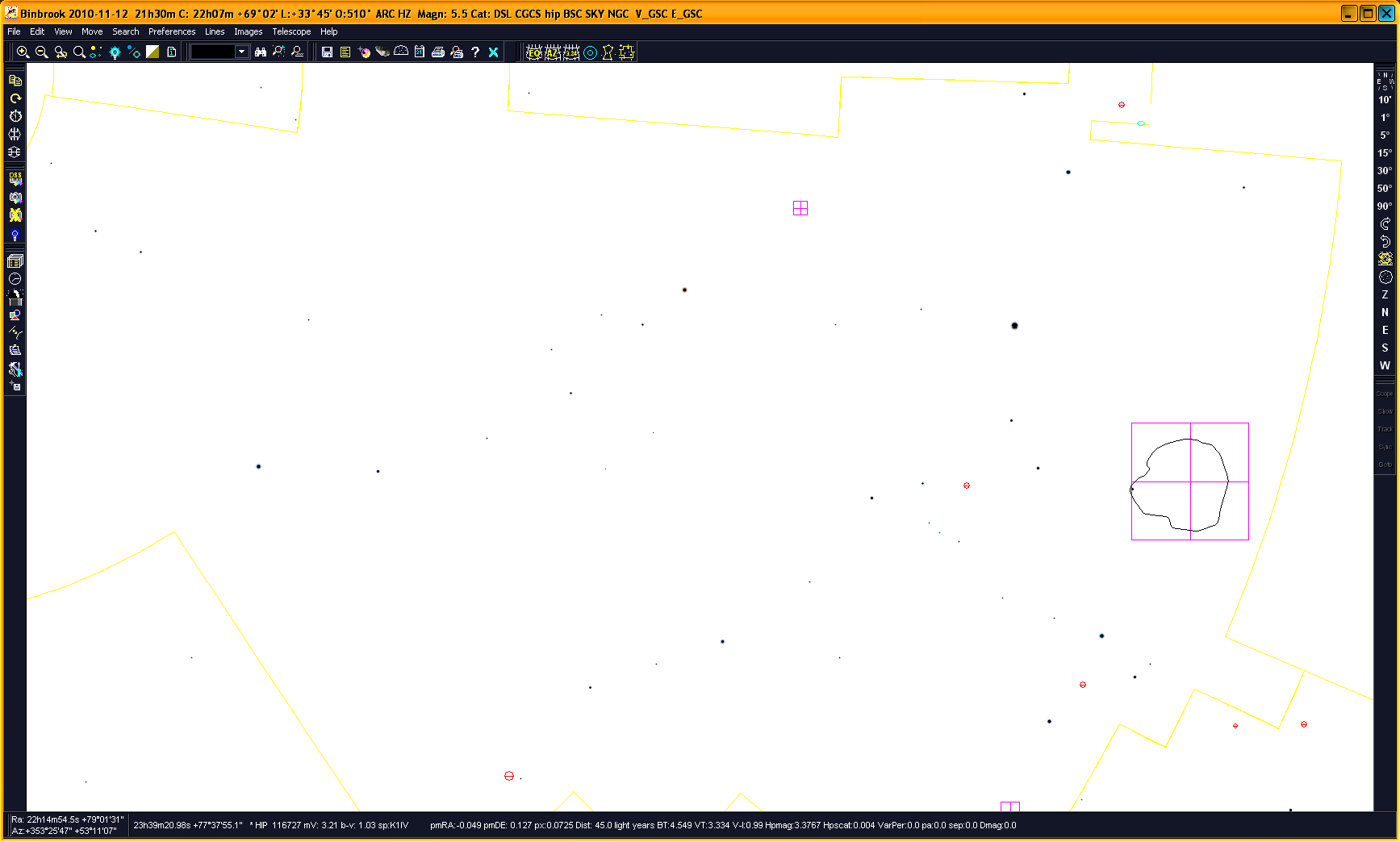
A chart showing the stars of Auriga brighter than Magnitude 5.5
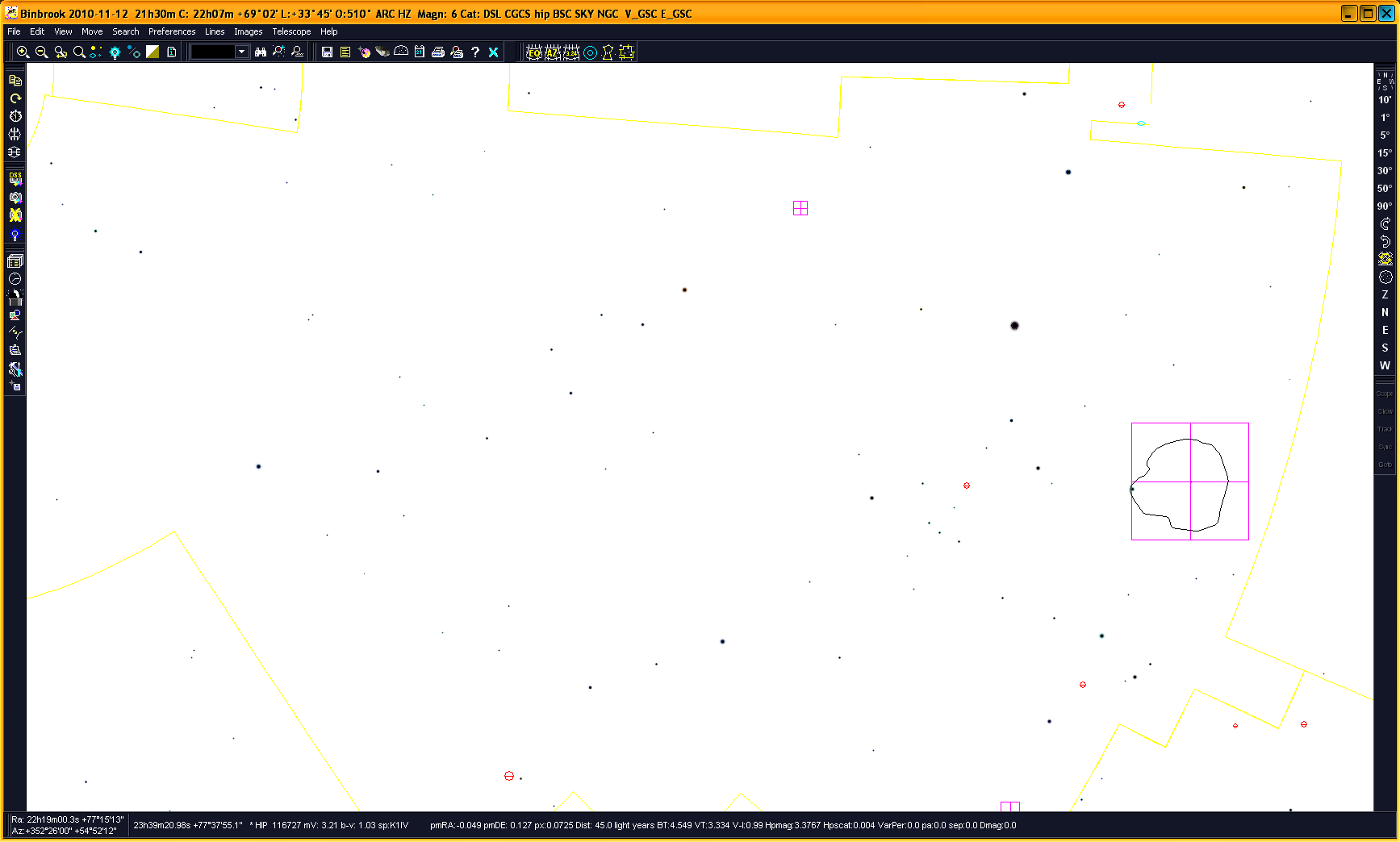
A chart showing the stars of Auriga brighter than Magnitude 6.0
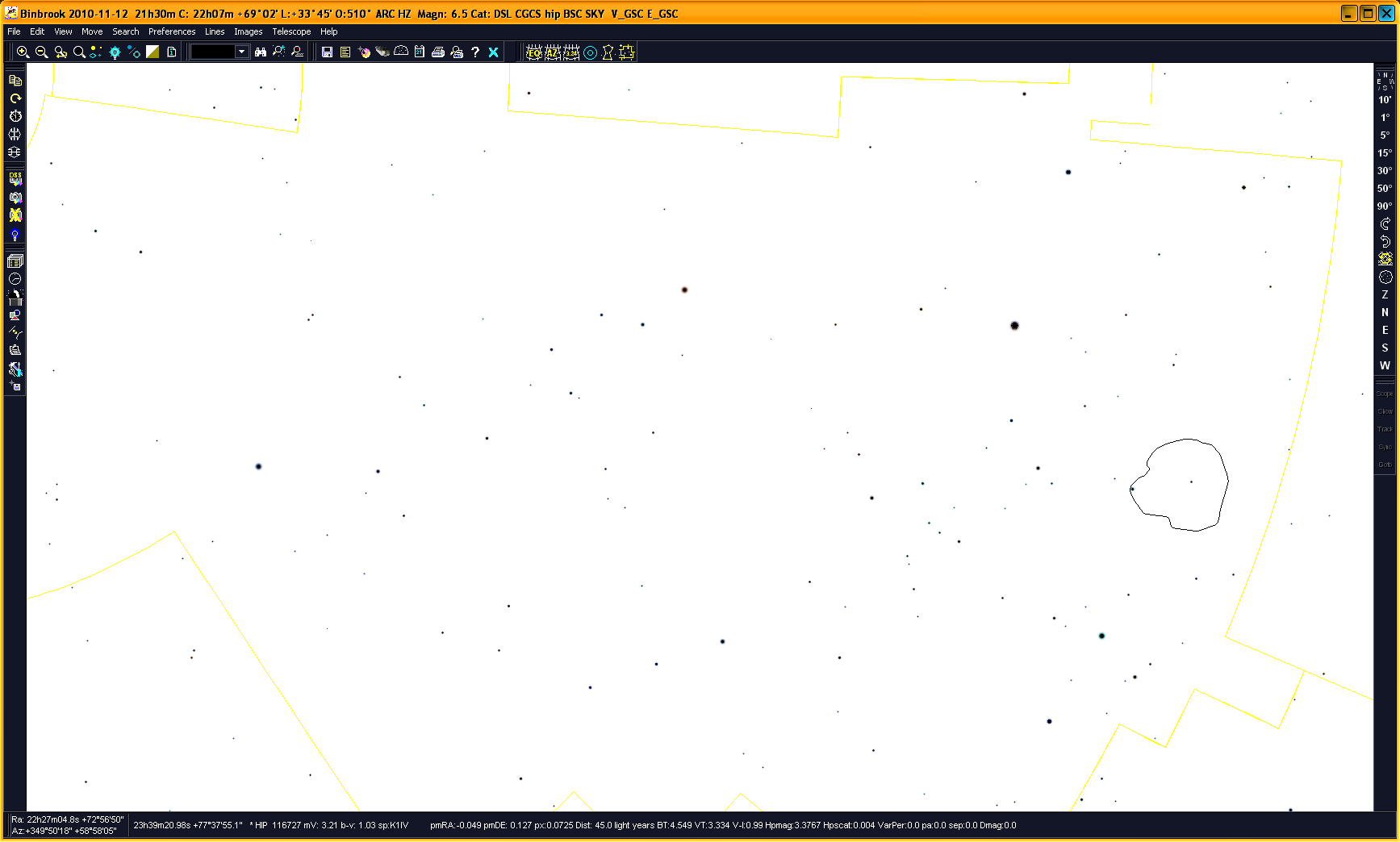
A chart showing the stars of Auriga brighter than magnitude 6.5
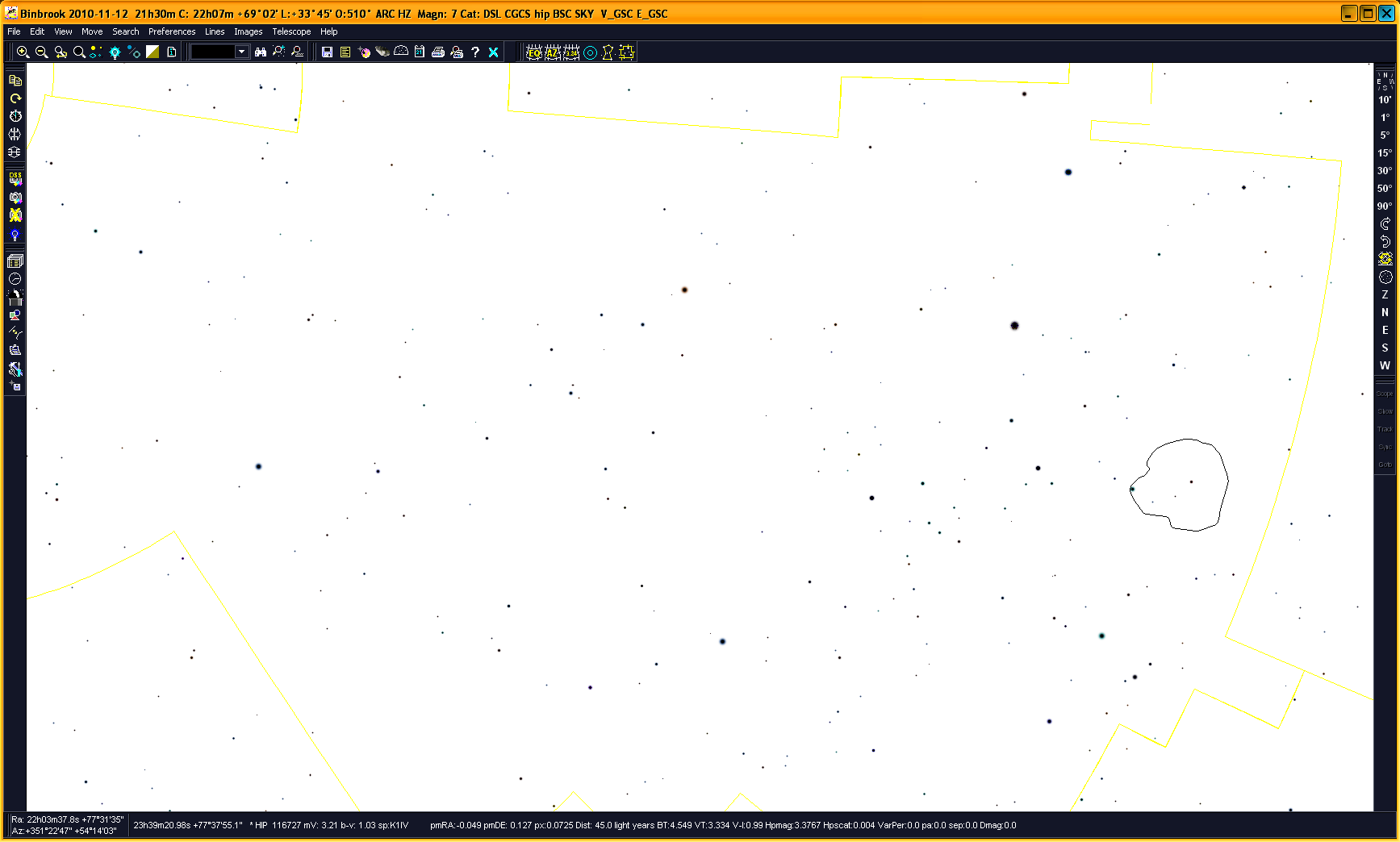
The most detailed chart, shows the stars of Auriga brighter than magnitude 7.0

Images of Jupiter

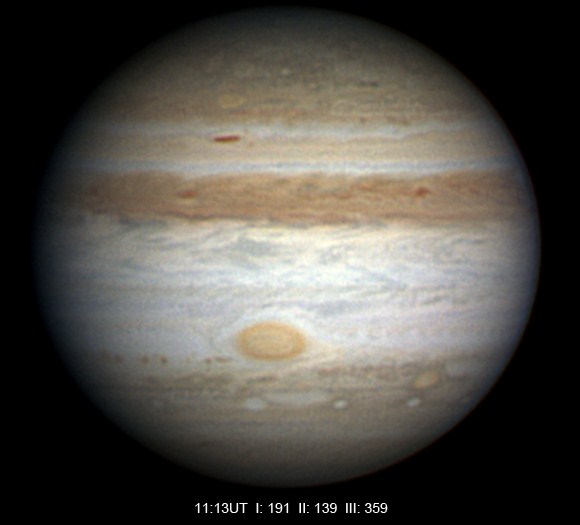
Here is an image of Jupiter taken by my pal Chris Go on 9 November, showing the absent SEB and the Great Red Spot as it appears now (N is up). Watch the SEB for developments:

Jupiter 9 Nov 2010 (our time)(N is up)

Exciting developments on Jupiter

Sky & Telescope is reporting news of the possible return of Jupiter’s South Equatorial Band. Christopher Go and Donald Parker have observed a bright round spot in the position normally occupied by the SEB. In the past, such spots have darkened, then spread out to form the usually red-brown “stripe” known as the South Equatorial Band.

The newly observed spot will transit Jupiter’s disk tomorrow night (Nov. 11) at about 12:30 a.m.** according to Donald Parker.

Be sure to watch Jupiter and follow any developments.

Sky & Telescope’s complete article can be found here: http://www.skyandtelescope.com/observing/home/107042728.html

Update 7:45 pm, Nov.11:
** Sky & Telescope have since corrected the transit time for the SEB “spot” to 5:28 UT Nov. 11 – which means LAST night. ( !! ) The spot is located at approximately 150 degrees longitude (system III) on Jupiter. To determine the current CML (central meridian longitude) on Jupiter for any given date or time, you can use the online calculator at: http://www.arksky.org/newcmcalc.htm .

mag 8.5 atlas and double sided planisphere

http://www.geocities.jp/toshimi_taki/

I found this by chance. Its a series of charts with a manual and index of objects. It seems to be very well done and has a lot of deep sky detail. See what you think.