Astro talk at London, Ontario

Target Earth: Impacts Large and Small – Feb. 9

This one is for the week of our February meeting. If you are in the area
you might consider taking it in.

Peter Brown is an excellent speaker. I hope he will address our club in the future.
Here’s the annoucement for your pleasure.

February’s ?Classes without Quizzes” lecture is called Target Earth: Impacts Large and Small. The Earth is constantly bombarded by asteroids and comets. Peter Brown, physics & astronomy associate professor at Western, will discuss the threat these extraterrestrial impacts pose, and how they also offer researchers unparalleled opportunities to better understand our solar system and how it formed. The lecture takes place on Tuesday, February 9 at the Medway Community Centre, Sherwood Forest Square, Wonderland Road North, London. Doors open at 6:30 p.m. and the lecture begins at 7 p.m.

“Classes without Quizzes” is a complimentary lecture series for the community offered by The University of Western Ontario. Join us for topical, entertaining and insightful monthly lectures by some of Western?s leading faculty, each taking place in different London locations through to Spring 2010. For more information or to RSVP for a lecture, please email programs@uwo.ca, call 519-661-2111 ext. 85739 or visit http://communications.uwo.ca/CWQ/
Observing at the Alternate Site

Jim, John and I arrived about 7 PM and set up what equipment we had brought.

I also started shifting my weight from foot to foot to keep them warm. Boy, it was cold out there. The sky was clear, but the transparency was not good. It was still a pretty bright background.

Camelopardalis was almost at the zenith. That’s the worst place to find something with an alt-az. I brought my Big Black Binoculars with me. They are not good at the zenith but would do a fine job elsewhere in the sky. Orion was my first target.

I decided to snap some sky photos to get ‘warmed up’ and noted that as usual, focus was going to be an issue. Without the moon in the sky, the auto focus on my camera does not work, and manual focus means trying over and over.

Jim was using a 9.25 inch SC.

John had his binoculars trained almost on the zenith, at Kemble’s Cascade. What a nice view it was. I could see how it would earn a name instantly if someone spotted that in binoculars.

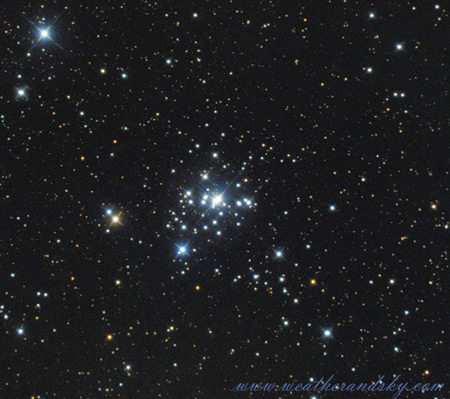
We eventually got Jim’s scope focused on NGC1502 at the end of the cascade. What a lovely set of matched pairs of stars it has. It’s like a special star-stamp was used to put pairs on the sky over and over.

After a while another member arrived and we shared views of Orion, and a few double stars.

At 9 PM or so, it was so cold, we decided to retire to Tim Horton’s at Nebo Road, and discuss all manner of interesting topics, while our feet warmed up.

It was our first outing of the year, and high time too. I don’t think i was out in November or December.

It can only get better now. Those long-johns are starting to sound like a good idea. John and Jim were cosy as teddy bears in them.

Our next outing is no later than January 22nd or 23rd, at Burlington. By then the half moon will make a great target, and mars will rise in the east.

Steve

————————-
Update By KerryLH

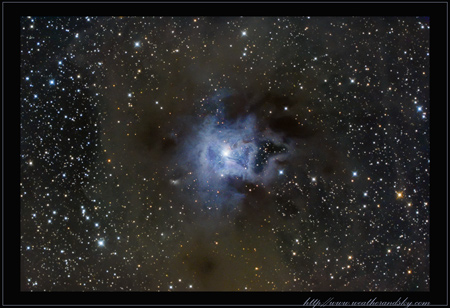
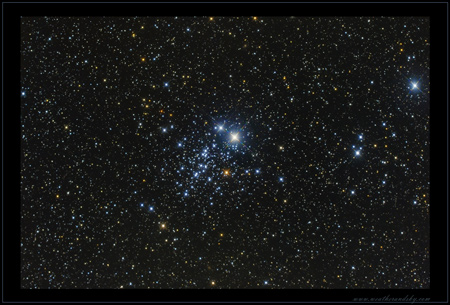
While the crew was out at Tyneside I was able to capture that pretty cluster NGC1502 from home. The entire Kemble’s Cascade was too large to fit in the field of view of the 8in and QHY-8 but it was nice to get some resolution on this small cluster at the end of it. Next time I’ll give the entire cascade a try with a different setup.

Large version: http://www.weatherandsky.com/main.php?g2_view=core.ShowItem&g2_itemId=7568&g2_imageViewsIndex=3

Observing tonight

Hi Everyone

Some HAA members will be setting up telescopes and binoculars at the Alternate Site on Tyneside
tonight from about 7 PM until about 9 PM. It’s cold so dress warm. Please
bring some of your equipment or you can share mine.

Cheers,
Steve Germann

ASX?s ?Expanding Canada?s Frontiers? Symposium

Sent to me via Facebook. I thought some club members might be interested in this. Sounds interesting.

ASX?s 7th Annual ?Expanding Canada?s Frontiers? Symposium

The Astronomy & Space Exploration Society (ASX) at the University of Toronto invites you to this exciting event!

Featuring:
* Prof. Peter Schultz (NASA LCROSS mission): Water on the Moon – a new oasis for life in space
* Prof. Sara Seager (MIT): seeking the stuff of life beyond our solar system
* Dr. Firouz Naderi (NASA JPL): engineering the future of robotic space exploration
* Dr. Narendra Bhandari (Indian Space Res. Org.): India’s Space Program finds water in the lunar desert

DATE & TIME: Friday, January 29, 2010, 6:30 PM
(Doors open at 5:30 PM, reception at 10 PM)

LOCATION: Convocation Hall, University of Toronto (31 King?s College Circle, Toronto)

ADMISSION:
General Public: $20 ($15 until Jan 7, 5pm) from UofT TIX:
http://uofttix.ca/view.php?id=579
Phone #: (416) 978-8849

** This event has attracted over 1,000 attendees in the past, so do book your ticket early!

ABSTRACT: The search for habitable worlds other than our own, from nearby in our solar system to far away exoplanets, is one of the greatest scientific endeavors of human history. The discovery of many exoplanets in recent years as well as the astonishing discovery of water on the moon has propelled this quest to the forefront of today?s scientific research. With these discoveries in mind, ASX is pleased to present a truly inspiring cast of speakers who are at the forefront of this field. Please come out on January 29th to hear these speakers talk about their latest work and accomplishments as well as their perspectives on the search for other worlds and space exploration.

More info: http://asx.sa.utoronto.ca/symposium/
Facebook: http://www.facebook.com/event.php?eid=233912979487

About ASX:
The ASX is a student group at the University of Toronto that is committed to bringing about awareness of astronomy and space exploration news, research, initiatives and opportunities in Canada and around the world, to the students and the greater public.

Anniversary

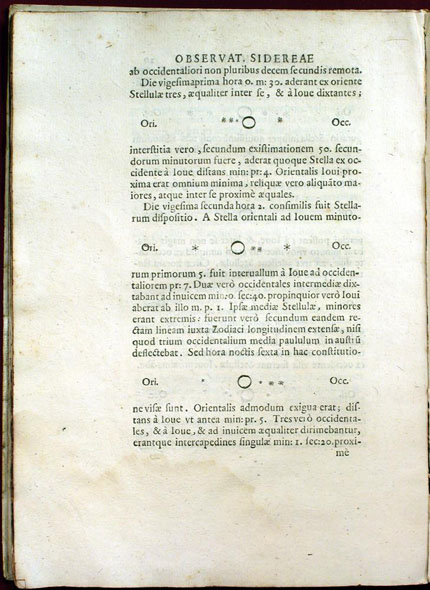
Today marks the 400th anniversary of the discovery of Jupiter’s moons, and the start of a whole new chapter in the history of science.

Despite the fact that last year was the International Year of Astronomy in celebration of the 400th anniversary of the first astronomical use of the telescope, it was actually in early 1610 that Galileo made many of his most important discoveries and announced them in his book, the Sidereus Nuncius.

From the Sidereus Nuncius, By Galileo Galilei:

“On the seventh day of January in this present year 1610, at the first hour of the night, when I was viewing the heveanly bodies with a telescope, Jupiter presented itself to me. And because I had prepaped a very excellent instrument for myself, I perceived (as I had not done before on account of weakness of my previos instrument) that there were three starlets beside the planet, small indeed, but very bright.”

And with those words began the era of modern observational astronomy…

Page showing Jupiter observations from ‘Sidereus Nuncius’

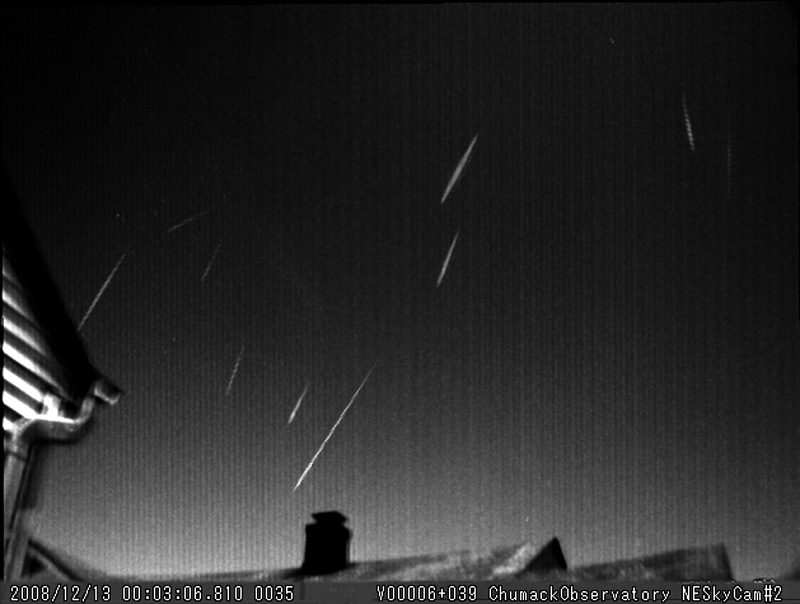
Geminids – the best light show of the year??

The night of Sunday, Dec 13/2009 and into the morning of the 14th marks the height of the Geminid meteor shower. Peak is expected around midnight EST (04:00 UTC).

On average this is the best meteor shower of the year, with rates of up to 120 meteors per hour or more from a dark location. A nearly new moon will result in dark skies allowing you to see more of the fainter displays.

This meteor shower is dust and ice left over from the extinct comet 3200 Phaethon which crossed Earth’s orbit more than a century ago. It’s called an extinct comet since all of the ice has sublimated from multiple passes around the sun and no longer produces a tail.

Photo of Geminids

This is a “broad” shower meaning the show will last for hours or even days on either side of the peak. Some have already reported seeing some Geminids and it will only get better as we get closer to the 13th. If it’s cloudy on Sun, then consider venturing out the night before or after.

While the Geminids back in the 19th century were rather unimpressive, they have continued to get better each year to become the most prolific shower of the year. Some scientists believe that Jupiter’s gravity has caused the debris stream from 3200 Phaethon to drift so that we are penetrating deeper into the stream, resulting in the better shows we now enjoy.
More info here

As the name suggests, these appear to originate from the constellation Gemini. At this time of year for North America, Gemini is visible most of the night. From our location, it is just east of Orion. Here’s a skymap showing you where to look.
Geminid SkyMap
The full size chart can be found here.

Needless to say, now that we’re into winter, it’s likely to be cold. (Current forecast for Sun night is for a low of -1C, cloudy and a chance of showers or wet snow. Sat night might be the clearest night.) So be sure to dress warmly and bring lots of hot chocolate to stay comfortable. As with all good meteor showers, the best way to observe these is to lay back on a lounge chair to take in the whole sky. Perhaps bring a sleeping bag to help keep you warm.

Back on Nov 16, I saw more than 70 Leonids and 20 sporadics from our observing location at Tyneside and thought this was a pretty good show. The Geminids should be even better. Hopefully you’ll brave the cold and enjoy this display.

A Special Full Moon

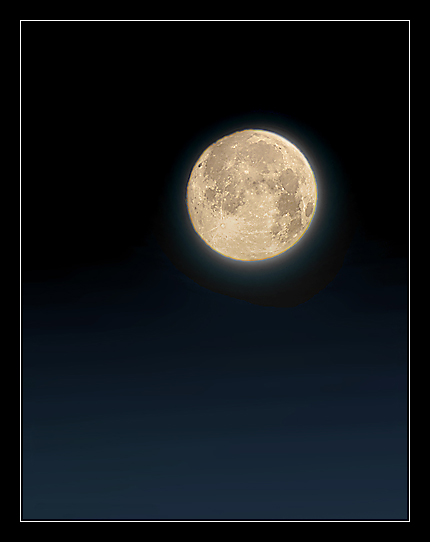
Tonight the moon is full and certainly worthy of a good look (technically, the moon is full on December 2nd, but in the early morning hours. why not look tonight and tomorrow?). This being December 1st, we will have the opportunity to observe two full moons this month. The second full moon will occur on December 31st, the last night of the year.

As has been described by others, the full moon of each month carries several names. Autumn’s Harvest Moon is best know, followed by the Hunter’s Moon. Tonight’s full moon is known as the Cold Moon, or the Long Night Moon, both very appropriate names. It is also known as the Moon before Yule. The next full moon, on New Year’s Eve, will be the Moon after Yule, not surprisingly.

I went out late last night (really early this morning; I almost forgot all about it!) to have a look at the moon, as November 30th marked the 400th anniversary of Galileo’s first telescopic observation, and the first thing he looked at was naturally the moon (it was a waxing crescent, and he watched it set). I took a photo to commemorate the occasion, and you can see it below.

Have a look at the moon this month, and think of the passing seasons, how we are treated to two full moons this month and how after so many years, Galileo’s first steps into a new science still carry so much meaning for us.

The moon sets 400 years after Galileo first observed the same thing on November 30th, 1609

Some new images this fall!

With winter fast approaching I decided to do an imaging marathon back when we had a few really nice clear nights around the new moon. Clear skies and a sleeping baby helps :). Also thank goodness for some semi-automation!!!

Here are some of the images: Taken with the QHY-8, Astro-Tech 8in RC and TV 0.8 reducer.

Iris nebula: although this was imaged back in the early fall I finally found some time to process it. This is a whopping 12 hrs of total exposure time but believe me it was needed from my location. Although the light pollution is not terrible, this is a dark nebula and for that you really should have pristine skies.

http://www.weatherandsky.com/main.php?g2_view=core.DownloadItem&g2_itemId=7553

ET Cluster: This is a neat looking cluster that looks like ET. I remember seeing it for the first time in the eyepiece from Glenn and Gails dobservatory last year.

http://www.weatherandsky.com/main.php?g2_view=core.DownloadItem&g2_itemId=7558&g2_serialNumber=3

In addition to those I have frames of M1, m42, the horsehead and the cone nebula region that I’ll post when I get the chance to process them.

KerryLH

Leonids Meteor Shower peak tonight Nov 16

Hopefully you had a chance to get out and observe some of the bright meteors from the Taurids during the last week. These were few but quite bright.

If you didn’t, then tonight is your night. The Leonids will be starting after dark overnight tonight Nov 16 and into the early morning of Nov 17. They will appear to emanate from the constellation Leo rising a little after midnight. These are one of the better showers during the year (behind Geminids and Perseids). They are the result of debris being left behind from Comet Tempel-Tuttle which returns every 33 years.

The forecast tonight is for clear skies and no Moon. So get yourself out to a dark location and enjoy the wonderful show that nature will be providing. The peak for our area is expected to occur around 4 am in the morning of Tues 17 Nov as we pass through a slightly more dense stream of debris, but any time after midnight should provide a good show with rates ranging from about 20 per hour to more than 50 per hour.
Sky Chart for Leonids and Mars
Link to larger version

Since Mars is also currently located near Leo, it will be rising at the same time. And we are now only a few months away from opposition so Mars will be getting closer and brighter than it’s been for almost 2 years. So you have a double incentive to get out observing. Perhaps you will catch a meteor passing in front of Mars – now that would be a real photo-op!

Taurid Peak Tonight

The Taurid meteor shower peaks tonight, making this an excellent time to go out and look for shooting stars.

The Taurids originate with a debris stream left from Comet 2P/Encke. There are actually two streams from this comet, and we passed through the first one about a week ago. Taurids are not that numerous, but are usually quite bright, so it’s always a treat to see one.

No special equipment is needed for meteor watching; just keep an eye on the sky for the next couple of nights. And getting some practice now will have you good and ready for next week’s Leonid shower.